
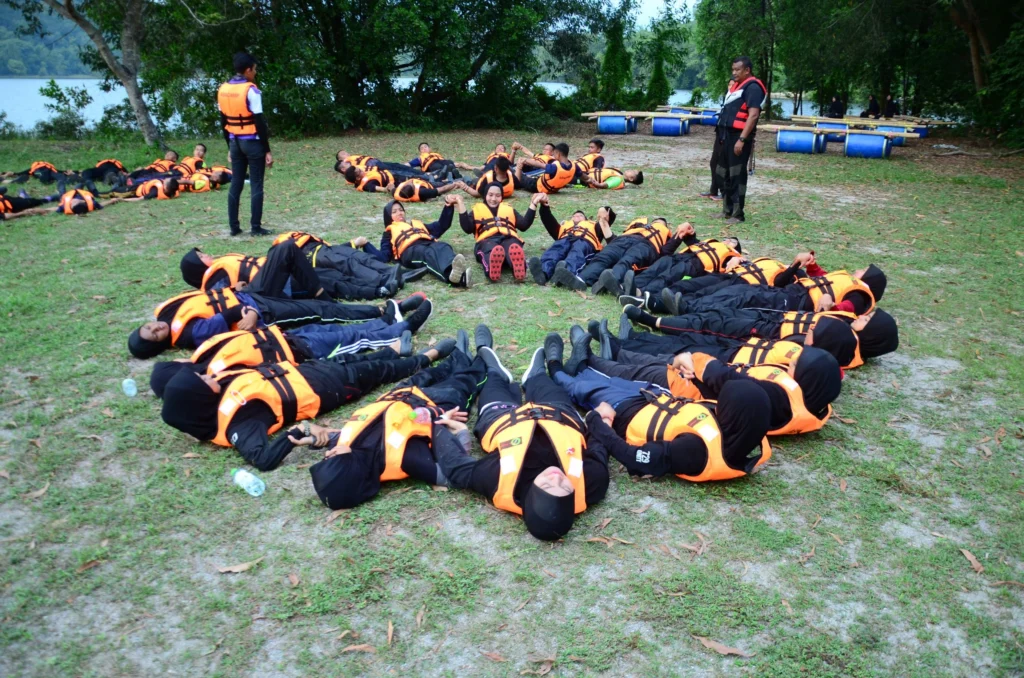
Team building is often seen as merely a recreational activity, but in reality, it is a strategic intervention designed to address internal team challenges. Many companies implement programs without fully understanding the real issues their employees face, resulting in minimal long-term impact. Therefore, selecting the right team building module becomes a critical factor in ensuring program success.
This article will help HR professionals and management understand how to choose the right module based on team challenges, ensuring that training investments deliver meaningful returns.
Why Team Building Modules Must Be Customized
Every team has different dynamics, challenges, and levels of maturity. Using the same module for all teams may result in unmet objectives. The right module can help resolve conflicts, improve communication, and build trust.
When a team building module is selected based on actual team issues, participants become more engaged, and behavioral changes are more likely to occur after the training.
Identify Your Team’s Core Problems First
Weak Communication Issues
If team members frequently experience misunderstandings, struggle to share ideas, or fail to collaborate effectively, the primary focus should be communication skills. Modules emphasizing two-way communication, active listening, and discussion simulations are highly suitable in this situation.
Such training helps team members understand each other’s communication styles and reduces internal conflicts.
Lack of Trust Among Team Members
Teams with low trust often struggle to collaborate and may blame one another. For this issue, trust-building modules, collaborative activities, and group challenges are highly effective.
Activities that require interdependence naturally build trust without forcing it.
Team Building Modules Based on Team Maturity
Newly Formed Teams
For new teams, the main objective is to build rapport and understand each member’s role. Ice-breaking sessions, personality introductions, and light activities are ideal at this stage.
This approach reduces social barriers and accelerates the team formation process.
Existing Teams with Declining Performance
For established teams experiencing performance decline, modules focusing on reflection, problem-solving, and goal realignment are more relevant. These modules help teams identify the root causes of performance issues.
Strategically selected team building modules can reignite motivation and restore team direction.
Choose Modules Based on Organizational Objectives
Improve Work Productivity
If the organization’s primary goal is productivity, modules emphasizing time management, work efficiency, and structured collaboration are highly suitable. Real-work simulations help participants connect training to daily responsibilities.
This ensures that training remains aligned with workplace realities.
Develop Internal Leadership
Organizations aiming to nurture future leaders should prioritize leadership modules. These often include role-play, decision-making exercises, and leadership challenges.
Through such modules, leadership potential can be identified and strengthened systematically.
Key Factors When Selecting a Team Building Module
Alignment with Company Culture
Company culture plays a significant role in program success. Extremely adventurous modules may not suit more formal organizations. Therefore, the team building module should align with company values and norms.
When participants feel comfortable with the training approach, engagement naturally increases.
Participants’ Physical and Psychological Readiness
Not all teams are suited for physically demanding activities. Modules should consider age, fitness levels, and participants’ backgrounds to ensure inclusive participation.
Inclusive training creates a more positive overall impact.
The Role of the Facilitator in Module Effectiveness
A facilitator does more than conduct activities — they translate experiences into meaningful learning. Even a well-designed module can fail without an experienced facilitator.
A skilled facilitator ensures that each activity is connected to participants’ real workplace situations.
Common Mistakes in Choosing a Team Building Module
Many companies select modules based on trends or low prices without analyzing team needs. This mistake often turns training into mere entertainment without behavioral change.
Choosing a team building module without clear objectives also makes it difficult to measure training effectiveness afterward.
Combine Team Building Modules with Follow-Up Plans
Effective training does not end on the program day. Companies are encouraged to implement follow-up plans such as reflection sessions, team discussions, or behavioral KPIs.
Combining the right module with a structured follow-up plan ensures long-term training impact.
Conclusion
Choosing the right team building module is not about selecting the most fun activity, but about aligning it with team challenges and organizational objectives. By identifying real issues, understanding team maturity, and selecting the right facilitator, training can become a powerful transformation tool.
Investing in a strategic team building module helps organizations build stronger, more productive, and competitive teams in the long run.
Take immediate action for a more productive and confident team!
Join EliteSkill Training for public service training through interactive, hands-on, and high-impact team-building sessions. Strengthen teamwork, enhance professional skills, and boost your team’s spirit today.
Contact us now and transform your team!
📲 WhatsApp us at 014-591 7867
📧 Email: aidamohd@eliteskilltraining.com
🌐 Visit: www.eliteskilltraining.com
EliteSkill Training: Making learning fun.

