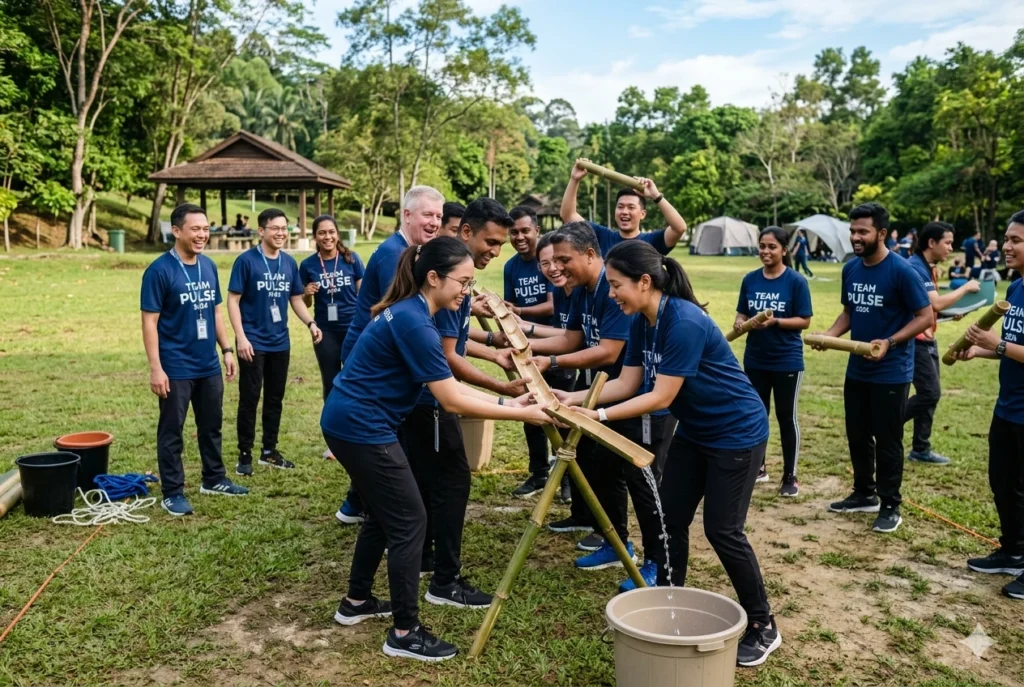
Many organizations invest time and resources in conducting team building activities with the goal of improving teamwork and communication. However, not all programs deliver the expected results.
In some cases, participants view these activities as mere entertainment rather than opportunities for growth. This indicates that poorly planned team building activities may fail to achieve the organization’s true objectives.
This article outlines six key reasons why team building activities fail to deliver impact and the steps organizations can take to make them more effective.
The Importance of Team Building Activities in Organizations
Before understanding the reasons for failure, it is important to recognize the true role of team building activities in organizations.
Team development programs help build trust, improve communication, and strengthen collaboration among employees. They also play a key role in fostering better working relationships and reducing workplace conflicts.
However, without proper planning, the full potential of team building activities cannot be realized.
6 Reasons Team Building Activities Are Ineffective
1. Lack of Clear Objectives
One of the main reasons team building activities fail is the absence of clear objectives.
Some companies organize these programs merely as annual events without defining specific goals such as improving communication or building team trust.
Without clear objectives, participants may not understand the purpose of the program and will struggle to apply what they have learned in their daily work.
2. Activities Not Relevant to Real Work Situations
Another common mistake is selecting activities that are not aligned with real workplace challenges.
Effective team building activities should be relevant to employees’ daily responsibilities so that participants can see their practical value.
If the activities are purely game-based without learning elements, their impact on job performance will be minimal.
3. Low Participant Engagement
Active participation is essential for the success of any program.
However, in some team building activities, participants may show low interest or fail to fully engage.
This may be due to uninteresting activities or ineffective facilitation. Therefore, activities should be designed to encourage full participation from all attendees.
4. No Reflection or Learning Session
Another reason team building activities fail is the absence of reflection sessions after the activities.
Without discussion or analysis, participants may not fully understand the lessons learned.
Reflection sessions help participants connect their experiences to real workplace situations and identify ways to improve teamwork.
5. Lack of Consistent Management Support
The success of team development programs also depends on management support.
If leadership does not show commitment to team building activities, employees may perceive them as unimportant.
On the other hand, when leaders actively participate, it boosts motivation and demonstrates that the organization values team development.
6. No Follow-Up After the Program
The final mistake is the absence of follow-up actions after the program ends.
In many cases, team building activities conclude without any effort to apply the lessons learned in the workplace.
Without follow-up initiatives such as coaching or performance monitoring, the expected changes may never take place.
How to Make Team Building Activities More Effective
To ensure team building activities deliver positive results, organizations must adopt a more strategic approach.
This includes setting clear objectives, selecting activities relevant to workplace challenges, and ensuring active participation from all employees.
Additionally, organizations should include reflection sessions and follow-up actions to ensure that learning outcomes are applied in daily work.
The Role of Facilitators in Program Success
Facilitators play a crucial role in ensuring the effectiveness of team building activities.
Experienced facilitators can structure activities effectively, encourage participant engagement, and help participants understand the program’s objectives.
Choosing the right facilitator significantly enhances the quality of the program and ensures meaningful outcomes for team development.
Conclusion
While team building activities are an important tool for organizational development, their effectiveness depends on proper planning and execution.
By understanding common reasons for failure, organizations can design more impactful programs that deliver long-term benefits.
Ultimately, well-planned team building activities not only improve communication and collaboration but also help build a more positive, productive, and high-performing workplace culture.
Take immediate action for a more productive and confident team!
Join EliteSkill Training for public service training through interactive, hands-on, and high-impact team-building sessions. Strengthen teamwork, enhance professional skills, and boost your team’s spirit today.
Contact us now and transform your team!
📲 WhatsApp us at 014-591 7867
📧 Email: aidamohd@eliteskilltraining.com
🌐 Visit: www.eliteskilltraining.com
EliteSkill Training: Making learning fun.