
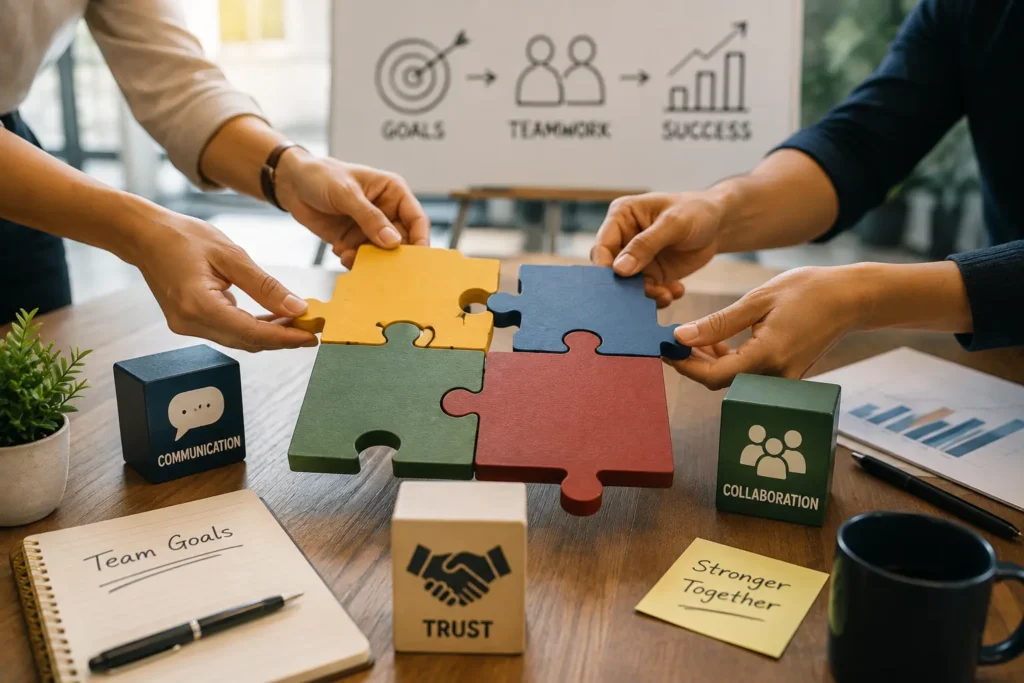
Effective communication and collaboration are essential for every successful workplace. Employees may have different personalities, skills, experiences, and working styles, but they still need to work together toward common goals. Team building communication activities can provide employees with opportunities to interact, understand one another, and develop stronger working relationships. When teams communicate effectively, they can solve problems faster, reduce misunderstandings, and achieve better results.
Team building is more than simply organizing recreational activities for employees. When properly designed, team building programmes can become valuable learning experiences that improve communication, trust, problem-solving, and collaboration. Through structured activities, employees can practise skills that are directly relevant to their daily responsibilities while building stronger connections with their colleagues.
Why Communication Matters in a Team
Communication is the foundation of successful teamwork. Employees need to communicate clearly when discussing projects, assigning responsibilities, solving problems, and making decisions. Poor communication can lead to duplicated work, missed deadlines, confusion, and unnecessary workplace conflict. Strong communication ensures that everyone understands what needs to be done and how their responsibilities contribute to shared objectives.
Good communication also creates a more positive working environment. Employees who feel comfortable expressing their opinions are more likely to share ideas, ask questions, and raise concerns. This openness allows teams to identify problems earlier and find better solutions. Team building activities can help employees become more comfortable communicating with colleagues in different situations.
5 Ways Team Building Strengthens Communication and Collaboration
1. Builds Trust Between Team Members
Trust is one of the most important elements of effective teamwork. Employees are more likely to communicate openly when they trust the people around them. Team building activities can create opportunities for employees to depend on one another, share responsibilities, and work toward a common objective. These experiences can help strengthen relationships and create greater confidence among team members.
For example, a problem-solving activity may require employees to rely on different team members to complete specific tasks. Each person contributes something valuable to the final outcome. This helps employees recognize the strengths of their colleagues and understand the importance of mutual support. Over time, these experiences can strengthen trust beyond the activity itself.
2. Improves Active Listening Skills
Communication is not only about speaking. Listening is equally important, especially when teams need to understand different opinions and perspectives. Team building activities can encourage employees to practise active listening by requiring them to follow instructions, understand ideas, ask questions, and respond appropriately to their teammates.
Active listening can reduce misunderstandings and improve workplace relationships. Employees who listen carefully are more likely to understand what their colleagues actually mean instead of making assumptions. This skill becomes particularly useful during meetings, project discussions, customer interactions, and conflict resolution.
3. Encourages Better Collaboration
Every employee brings different strengths to a team. Some may be strong problem-solvers, while others may excel at organizing information, communicating ideas, or leading discussions. Team building activities allow employees to discover these strengths and learn how to use them effectively as a group.
Effective collaboration happens when employees understand that success is not only an individual achievement. Team members need to support one another, share information, and contribute toward common goals. Team building encourages this mindset by placing employees in situations where cooperation is necessary to achieve successful outcomes.
4. Helps Reduce Workplace Conflict
Conflict can occur when employees have different opinions, expectations, or working styles. While disagreement is not always negative, unresolved conflict can damage relationships and productivity. Team building activities can help employees understand different perspectives and develop more constructive ways of responding to disagreements.
Activities that require discussion and group problem-solving can teach employees how to communicate under pressure. Participants learn to explain their opinions, listen to others, negotiate solutions, and reach agreements. These experiences can be transferred into the workplace, helping employees handle disagreements more professionally.
5. Increases Employee Confidence and Engagement
Some employees may be hesitant to speak during meetings or share their ideas with colleagues. Team building provides a less formal environment where employees can participate, take responsibility, and contribute to group activities. Positive experiences can increase their confidence and encourage them to become more involved.
Greater confidence can influence workplace communication. Employees who feel comfortable with their teammates may be more willing to ask for clarification, offer suggestions, and communicate concerns. This can contribute to a more engaged workforce where employees actively participate in achieving organizational objectives.
Team Building Activities That Improve Communication
Problem-Solving Activities
Problem-solving activities are effective for developing communication and collaboration because participants need to work together toward a specific outcome. Team members must discuss possible solutions, divide responsibilities, exchange information, and make decisions. These activities help demonstrate why clear communication is important when working under pressure.
Trust-Building Activities
Trust-building activities encourage employees to depend on one another. They may involve communication challenges, group tasks, or exercises where participants need to provide clear instructions and support. These activities can help employees become more comfortable relying on their colleagues and communicating openly.
Leadership and Collaboration Activities
Leadership-focused activities allow employees to practise decision-making, delegation, communication, and group coordination. Participants can take turns leading different tasks, giving everyone an opportunity to experience both leadership and supporting roles. This can improve understanding between team members and encourage stronger collaboration.
How Organizations Can Make Team Building More Effective
Team building should always have a clear purpose. Organizations should identify the specific skills they want employees to develop before selecting activities. For example, a team experiencing communication problems may benefit from activities focused on active listening and information sharing, while a team facing collaboration challenges may need problem-solving and cooperation exercises.
Reflection is another important part of an effective team building programme. After an activity, participants should discuss what they learned, what challenges they experienced, and how the lessons can be applied at work. This connection between the activity and real workplace situations helps employees turn an enjoyable experience into practical professional development.
Long-Term Benefits of Team Building
Consistent team building can contribute to stronger workplace relationships. Employees may become more comfortable communicating with one another, more willing to offer support, and more aware of their colleagues’ strengths. These improvements can create a healthier team environment and make collaboration easier.
Over time, improved team building communication can influence broader organizational performance. Teams that communicate clearly can respond to challenges more efficiently, make better decisions, and reduce unnecessary misunderstandings. Collaboration also becomes easier when employees understand their shared responsibilities and trust one another.
Why Team Building Should Be Part of Employee Development
Employee development should not focus only on technical knowledge. Communication, collaboration, problem-solving, adaptability, and interpersonal skills are equally important in today’s workplace. Team building provides a practical environment where employees can develop these skills through real interaction rather than relying solely on classroom-based learning.
Organizations that invest in team development demonstrate that they value both employee performance and workplace relationships. When team members are given opportunities to learn and grow together, they can develop stronger connections and a greater sense of belonging. This can contribute to employee engagement and a more positive organizational culture.
Conclusion
Strong communication and collaboration do not happen automatically. Teams need opportunities to build trust, understand different perspectives, practise active listening, solve problems together, and develop confidence. Team building communication activities can provide a practical and engaging way to strengthen these essential workplace skills.
When organizations invest in purposeful team building, they are investing in more than employee entertainment. They are creating opportunities for employees to communicate more effectively, collaborate with greater confidence, and develop stronger working relationships. With the right activities and follow-up, team building can become an important part of building productive, connected, and high-performing teams.
Take immediate action for a more productive and confident team!
Join EliteSkill Training for public service training through interactive, hands-on, and high-impact team-building sessions. Strengthen teamwork, enhance professional skills, and boost your team’s spirit today.
Contact us now and transform your team!
📲 WhatsApp us at 014-591 7867
📧 Email: aidamohd@eliteskilltraining.com
🌐 Visit: www.eliteskilltraining.com
EliteSkill Training: Making learning fun.

